Family stories
Questions to Ask Your Parents About Family Keepsakes
A practical conversation guide for learning the people, places, memories, and traditions connected to the objects your family has kept.
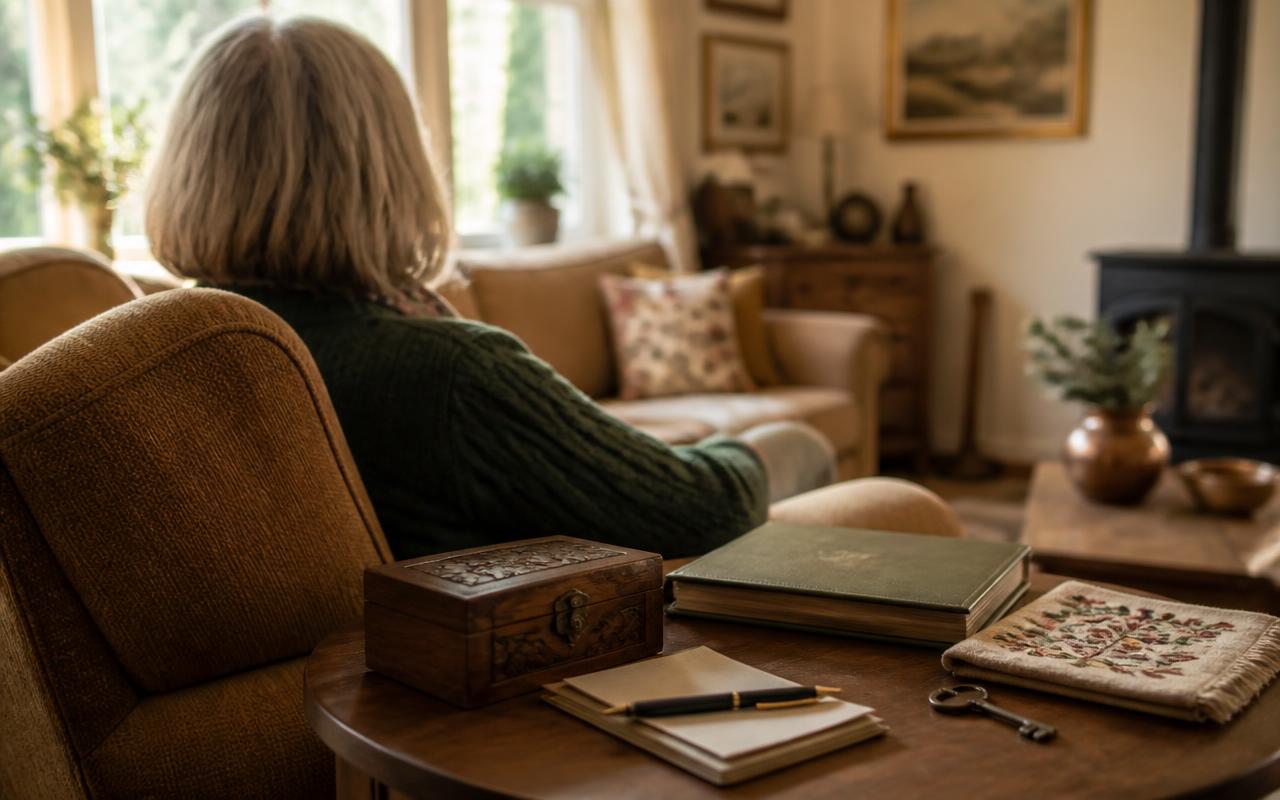
A familiar object can sit in a home for decades while most of its history lives in one person’s memory.
Your mother may know who embroidered the tablecloth in the dining-room cabinet. Your father may remember why his grandfather carried a particular pocketknife. A box of holiday ornaments may have a story attached to every piece, even though none of those stories has ever been written down.
The right questions can bring those details forward. You can use this guide during one longer conversation or choose a few questions each time you visit.
Begin with one object
Choose a keepsake your parent recognizes and can comfortably talk about.
Good starting points include:
- An item that is already displayed in the home
- Something your parent inherited
- An object connected to a family tradition
- A piece of jewelry they wear regularly
- A tool, kitchen item, book, photograph, or decoration they have kept for years
- An item they have previously mentioned giving to someone in the family
Place the object where both of you can see it. Holding or looking at an item often brings back details that would be harder to recall from a general question about family history.
Questions that identify the item
Start with the basic information. These questions help establish what the item is and how your family refers to it.
Ask:
- Do you know what it was originally used for?
- Who owned it before you?
- Do you remember where it came from?
- About how old do you think it is?
- Is there a maker’s mark, signature, inscription, or label?
- Was it part of a larger set?
- Has anything about it been repaired, replaced, or changed?
- Is there another family item connected to it?
Write down names exactly as your parent gives them. Nicknames, maiden names, family spellings, and place names can become difficult to recover later.
When a date is uncertain, record the estimate your parent gives you. A note such as “already in Grandma Helen’s house by the early 1960s” gives the family a useful point of reference.
Questions about the person connected to it
Many keepsakes become meaningful because of the person who owned or used them.
Ask:
- Who do you think of when you see this?
- What was that person like?
- How were they related to us?
- What did they use this for?
- Did they use it often or only on special occasions?
- Where did they usually keep it?
- Did they have any habits or routines connected to it?
- Is there something about them that this item helps you remember?
- Did they ever tell you why it mattered to them?
- Who else in the family would remember them using it?
Follow up when your parent mentions a detail that seems familiar to them but may be unfamiliar to everyone else.
For example:
- What was Uncle Ray’s workshop like?
- Which house are you referring to?
- Who usually attended that dinner?
- What did Grandma mean when she called it her Sunday dish?
Those small details give the story a setting and make it easier for another generation to picture.
Questions about when and where it was used
Objects often carry memories of a particular home, town, room, or period of family life.
Ask:
- Which house do you remember this being in?
- What room was it kept in?
- Did it travel with the family during a move?
- Was it used at work, at home, at church, or somewhere else?
- Was it connected to a particular town or region?
- Do you associate it with a certain time in your life?
- Was it used during a war, migration, job change, or major family event?
- Are there photographs that show it in the background?
- Do you remember the last time it was regularly used?
A location can be as important as a date. “The blue bowl from the farmhouse kitchen” may be more recognizable to the family than a manufacturing year.
Questions about family traditions
Some keepsakes were part of routines that happened every week or every year.
Ask:
- Was this used for a holiday or family celebration?
- Who usually brought it out?
- What food, activity, or tradition went with it?
- Was there a family rule about who could use or handle it?
- Did anyone tell the same story whenever it appeared?
- Was it passed around, displayed, worn, or used in a particular way?
- Has the tradition changed over time?
- Would you like the family to continue using it?
These questions are especially useful for dishes, serving pieces, decorations, religious objects, clothing, musical instruments, games, and handmade items.
Record the routine along with the object. Knowing that a platter belonged to a great-grandparent is helpful. Knowing that it held cinnamon rolls every Christmas morning gives the family a much clearer memory to carry forward.
Questions about how it came into the family
An item’s path through the family can reveal relationships that are easy to lose.
Ask:
- Was this purchased, made, inherited, or given as a gift?
- Who gave it to the family?
- Do you know why they chose this particular item?
- Was it connected to a wedding, birthday, graduation, military service, or other occasion?
- Did someone make it by hand?
- Do you know where the materials came from?
- How did it pass from its first owner to you?
- Was there ever a disagreement about who should receive it?
- Did anyone almost throw it away, sell it, or donate it?
- Why do you think it survived when other belongings did not?
The route an item took can be surprisingly complicated. Record each owner your parent remembers, even when part of the sequence remains uncertain.
Questions about the memories attached to it
Some of the best stories begin with sensory details or ordinary moments.
Ask:
- What is the first memory that comes to mind when you see this?
- How did it feel to use or hold it?
- Did it have a particular smell, sound, or texture?
- Was it usually connected to a happy occasion, a difficult time, or everyday life?
- Did anything funny ever happen involving it?
- Did you ever get in trouble because of it?
- Did you want it when you were younger?
- Did you understand why it mattered at the time?
- Has its meaning changed for you as you have gotten older?
- What do you wish you could ask its previous owner?
Let the conversation wander when a question brings up another memory. The side story may explain more about the family than the object itself.
Questions about why the family kept it
A parent may have carried an object through several moves without ever explaining why.
Ask:
- Why have you kept this?
- Was there ever a time you considered letting it go?
- What would you miss if it were gone?
- Does it remind you of a person, place, or period of your life?
- Do you think other relatives understand why it matters?
- Is its financial value important, or is its meaning mainly personal?
- Is there a detail about it that people tend to overlook?
- What would you want someone to know before deciding whether to keep it?
The answer may be brief. “It was the only thing I had from my grandmother” can explain decades of careful storage.
Questions about what should happen to it next
Future plans can prevent confusion and hurt feelings.
Ask:
- Is there someone you would like to receive this?
- Have you told that person?
- Would you like it to stay with a particular side of the family?
- Should it continue to be used?
- Are there any care or storage instructions?
- Is there anything that should remain with it, such as a letter, photograph, box, or document?
- Would you be comfortable with it being sold or donated someday?
- Are there circumstances when you would prefer it go to a museum, archive, church, school, or community organization?
- What do you hope the next owner remembers about it?
- Who should make decisions about it if your first choice cannot take it?
A conversation about future ownership does not replace a will, trust, beneficiary designation, or other estate document. Record the wish as part of the item’s history and encourage your parent to include important directions in the appropriate legal documents.
Questions that help clear up uncertain details
Family stories often contain gaps.
Ask:
- How certain are you about that detail?
- Did you witness it yourself, or did someone tell you?
- Who might remember more?
- Is there a photograph, letter, receipt, newspaper clipping, or document that could help?
- Have different relatives told the story differently?
- Are there names or dates you would like us to verify?
- Is there a part of the story that has always been unclear?
- Do you know whether anything was written on the back, inside, or underneath the item?
- Is there another object that could help explain this one?
Record uncertainty honestly. Phrases such as “Mom believes,” “according to Uncle James,” or “possibly made around 1935” preserve the information without presenting a guess as a confirmed fact.
Questions for handmade keepsakes
Handmade items often hold details about skills, materials, and family life.
Ask:
- Who made this?
- Who taught them the skill?
- Do you know how long it took?
- Were the materials purchased, reused, or passed down?
- Was it made for a particular person or occasion?
- Did the maker create other pieces like it?
- Are any patterns, notes, or tools still in the family?
- Can you recognize the maker’s style or technique?
- Was this item used regularly?
- Are there stains, repairs, or worn areas connected to a story?
These questions work well for quilts, clothing, furniture, carvings, needlework, paintings, pottery, recipe books, tools, and home decorations.
Questions for military keepsakes
Military items may include uniforms, medals, patches, photographs, letters, equipment, and souvenirs.
Ask:
- Who did this belong to?
- Which branch and unit did they serve in?
- When and where did they serve?
- Do you know what this insignia, medal, ribbon, or patch represents?
- Was the item issued, purchased, traded, or given as a gift?
- Did the person ever talk about it?
- Are there service records or letters connected to it?
- Was it worn or carried during a specific assignment?
- Is there anyone else in the family who knows the story?
- Are there parts of the story the person preferred not to discuss?
Military service can involve painful or private experiences. Let your parent decide how much they want to share, and respect subjects they choose to leave alone.
Questions for photographs and documents
A photograph becomes much more useful when the people and setting are identified.
Ask:
- Who is pictured?
- What were their full names?
- Where was the photograph taken?
- About what year was it?
- What was happening that day?
- Who took the photograph?
- Do you know why it was kept?
- Is there writing on the back?
- Are there other photographs from the same occasion?
- Who else might recognize the people or location?
For letters, certificates, newspaper clippings, and other documents, ask who created them, who received them, and why the family saved them.
Write identifications in a separate record or use an archival-safe method. Avoid pressing hard with a pen on the back of an original photograph.
How to record the conversation
Choose the method that feels comfortable for your parent.
Options include:
- Taking written notes
- Recording a voice memo
- Making a short video
- Photographing the item while your parent talks
- Asking your parent to write a few sentences
- Inviting another relative to join the conversation
Ask permission before recording. Explain who will be able to hear or see the recording and where it will be stored.
Keep the equipment simple. A phone placed nearby can capture a clear voice recording in a quiet room. Test it briefly before beginning so you know the sound is working.
Try to preserve your parent’s own words. Their phrasing, expressions, and way of telling the story are part of the family record.
When memories differ
Two relatives may remember the same item differently.
One may say a quilt was made for a wedding. Another may remember it already being in the family years earlier. Both memories can be recorded with the name of the person who shared each version.
You can write:
- “According to Linda, the quilt was made for Ruth’s wedding.”
- “Michael remembers seeing it in their grandmother’s home before the wedding.”
- “The exact date has not been confirmed.”
This keeps the disagreement from disappearing and gives future relatives a place to continue the research.
A simple 15-minute conversation
For a short first conversation, ask these five questions:
- Who did this belong to?
- What do you remember about them using it?
- How did it come to you?
- Why have you kept it?
- What should the next person who receives it know?
Take a photograph of the item and record your parent’s answers.
That is enough to preserve the core of the story. You can return later for names, dates, condition notes, and additional memories.
Common conversation mistakes
Asking broad questions first
“Tell me about our family history” can feel difficult to answer. Begin with the object in front of you and ask about one person, place, or event.
Moving through questions too quickly
A pause may mean your parent is searching for a memory. Give them time before asking the next question.
Correcting details during the story
Let your parent finish the memory. You can return to names, dates, and conflicting information afterward.
Focusing only on age or financial value
The details that explain how an item was used often carry the strongest family meaning.
Recording without permission
Ask before making an audio or video recording. Some stories may feel private even when the object itself is familiar.
Waiting for the perfect time
A short conversation about one object can preserve information that would otherwise remain in one person’s memory.
Start with the keepsake already in front of you
Choose one familiar object during your next visit or phone call.
Ask who owned it, how it was used, why the family kept it, and what the next generation should understand. Photograph the item and save the answers while the details are still available.
One conversation may lead to another keepsake, another relative, and a story no one had thought to record.
More resources
Getting started
How to Create a Family Heirloom Inventory
A practical, step-by-step guide to documenting the keepsakes and belongings that matter to your family.
Recipes and traditions
How to Preserve the Stories Behind Family Recipes
Capture the memories, traditions, and personal details that make a family recipe worth passing down.
Family memories
How to Record Family Memories Before They’re Forgotten
Simple ways to capture a relative’s voice, preserve one focused memory, and add the details future generations will need.