Getting started
How to Create a Family Heirloom Inventory
A simple, story-first way to document family keepsakes, record where they came from, and preserve the details future generations may not otherwise know.
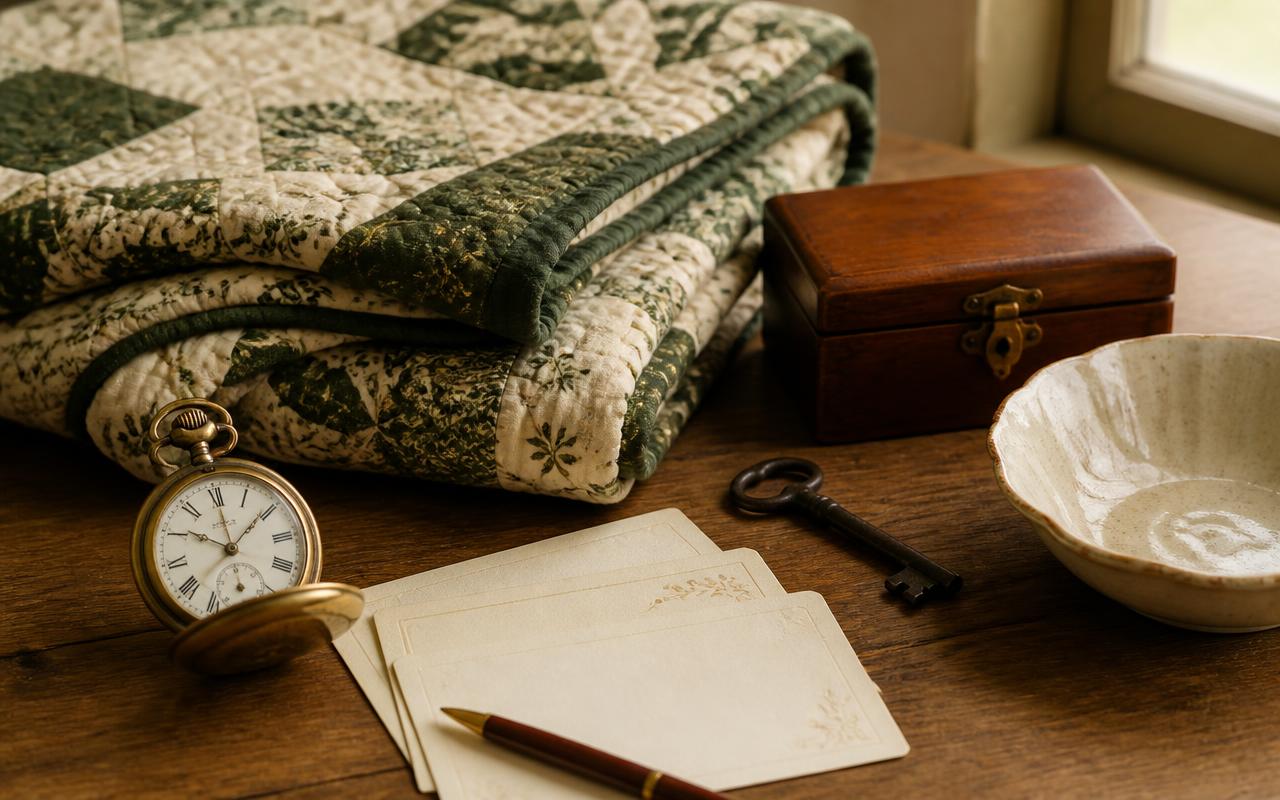
A family heirloom inventory can be a simple record of the objects your family wants to remember.
It might include your grandfather’s pocket watch, your mother’s handwritten recipe book, the quilt kept in the hall closet, a set of dishes used every Thanksgiving, or a piece of furniture everyone recognizes but no one remembers much about.
The value of the inventory comes from making each item recognizable and preserving the facts and memories connected to it. Begin with a few meaningful objects and use the same process each time.
What belongs in a family heirloom inventory?
Many heirlooms are ordinary objects that became meaningful through use, tradition, or connection to a person.
Consider documenting an item when:
- It belonged to someone important in your family.
- It is connected to a memorable person, place, or event.
- Your family has intentionally kept it over time.
- Someone would be disappointed if its story were lost.
- Its meaning would not be obvious to a person seeing it for the first time.
Jewelry, furniture, and antiques are natural choices, but everyday objects often carry the strongest stories. A mixing bowl, military patch, handwritten note, fishing lure, Christmas ornament, or well-used tool may tell you a great deal about the person who owned it.
1. Start with five items
Choose one small starting point.
You could begin with:
- Five items that immediately come to mind
- The keepsakes associated with one relative
- The heirlooms displayed in one room
- A box that has been waiting to be sorted
- The items a parent or grandparent most wants to discuss
A short first list makes the project easier to finish and gives you a process you can repeat.
Once you complete the first few entries, you will have a better sense of what information is useful, what questions remain, and which relatives may want to contribute.
2. Take one clear photograph
Photograph the whole item near a window or in a well-lit room. Use a plain surface when possible.
Watch for:
- Heavy shadows
- Bright glare
- A cluttered background
- Part of the item being cropped out
- Filters that change its actual appearance
For jewelry, maker’s marks or unusual details may be important. For furniture, quilts, and larger objects, the overall shape and pattern may matter more.
When you can save only one photograph, choose the image that would best help another person recognize the item later. Record inscriptions, signatures, and other markings in the written notes.
Aim for a clear, accurate photograph that another family member could use to identify the item.
3. Give the item a name your family will recognize
Avoid labels such as “watch,” “bowl,” or “old chair.”
A descriptive name gives the item immediate context:
- Grandpa Robert’s pocket watch
- Aunt June’s blue mixing bowl
- The Carter family wedding quilt
- Mom’s handwritten holiday recipe book
- The oak desk from the Tulsa house
Include the family name or person associated with the object when that information is known.
Also record where the item is currently kept. That might be a room, cabinet, closet, storage box, or another family member’s home.
Locations change, but a starting point makes the inventory much more useful than a list with no indication of where anything is.
4. Record the facts you know now
You can begin an entry with the information your family already knows.
For each item, try to answer:
- Who owned or used it?
- How did it enter the family?
- Approximately when and where was it used?
- How did it reach its current owner?
- Why has the family continued to keep it?
You can also note materials, inscriptions, maker information, visible damage, or other identifying details.
Approximate information can still be useful. “Probably purchased in the 1940s” gives future relatives more context than a blank field.
Separate confirmed facts from family guesses. An honest note that something remains uncertain is more helpful than recording a family story as fact when no one is sure.
5. Capture the story
Include the memories and traditions that explain why the family kept the item.
Ask questions such as:
- What do you remember when you see this?
- Who used it most often?
- Was it part of a family tradition?
- Where was it kept when you were growing up?
- Why did the family decide to save it?
- What should the next person who receives it understand?
Written notes are helpful. A voice memo or short video can also preserve a person’s expressions, pronunciation, laughter, and way of telling the story.
The recording can be casual. A natural two-minute conversation may become the most meaningful part of the entry.
6. Ask another family member what they remember
One person rarely knows the complete history of an heirloom.
Share the entry with a parent, sibling, aunt, uncle, cousin, or adult child who may recognize the object.
They might remember:
- A different name for it
- An earlier owner
- Where it was originally used
- A tradition associated with it
- Another photograph showing it in the family home
- A story no one thought to record
When relatives remember the story differently, record each version and note who shared it.
Family history often includes gaps and conflicting memories. Preserving those details gives future relatives a clearer picture of what the family knew and remembered.
7. Add a condition note and store the item carefully
Along with documenting the story, take a moment to record the item’s condition and storage location.
Paper, photographs, textiles, furniture, metal, and other materials can require different kinds of care. For fragile, damaged, or unusually valuable items, consult preservation guidance or a qualified conservator before attempting a repair.
The National Archives recommends keeping family papers and photographs away from hot attics, damp basements, garages, and possible water sources. It also recommends keeping original materials after digitization because digital files can be lost or become inaccessible.
Your inventory can include a brief condition note such as:
- Small tear along the bottom edge
- Missing clasp
- Fabric beginning to fade
- Stored in an acid-free box
- Needs professional evaluation before cleaning
A short note can help another family member notice changes and make better storage decisions later.
8. Make the inventory easy for trusted relatives to find
A useful inventory should be easy for trusted family members to locate.
Think about:
- Which relatives should be able to view it
- Who can help fill in missing information
- Who should maintain it in the future
- Whether important digital records have an appropriate backup
- How the family will find the inventory during a move, estate transition, or emergency
Sharing copies of family documents and photographs with relatives can also preserve information and encourage conversations that are worth recording. The Library of Congress offers preservation guidance families can follow at home.
You do not have to make every entry available to everyone. Choose the people who should know where the inventory is and how to access it.
A simple 20-minute way to begin
Choose one object and complete these five actions:
- Take one clear photograph.
- Give it a descriptive name.
- Record where it is kept.
- Write down three facts your family knows about it.
- Ask someone to explain why it matters.
That single entry gives you a starting point.
Add another item when you have a few minutes. A small collection built gradually can become a valuable family record.
Common mistakes to avoid
Trying to do the whole house at once
A large project can quickly become overwhelming. Begin with the items whose stories feel most important.
Recording only financial value
An appraisal may be useful for insurance or estate purposes, but it does not explain who wore the necklace, who made the quilt, or why a chipped serving dish appears in every holiday photograph.
Waiting until every detail is confirmed
Record what is known, identify uncertainties, and update the entry when new information appears.
Using vague item names
A descriptive title makes an object easier to recognize and search for later.
Leaving out the story
The physical item may survive for decades while its meaning disappears in a single generation. Record the memory while someone still remembers it.
Preserve what your family would otherwise have to guess
Each entry connects an object with the people, places, and memories that gave it meaning.
Begin with one item. Add a clear photograph, the facts your family knows, and the story someone still remembers. That gives another generation enough context to recognize the object and understand why the family kept it.
More resources
Family stories
Questions to Ask Your Parents About Family Keepsakes
Meaningful questions that can help uncover the people, memories, and stories behind treasured belongings.
Recipes and traditions
How to Preserve the Stories Behind Family Recipes
Capture the memories, traditions, and personal details that make a family recipe worth passing down.

Family memories
How to Record Family Memories Before They’re Forgotten
Simple ways to capture a relative’s voice, preserve one focused memory, and add the details future generations will need.