Family memories
How to Record Family Memories Before They’re Forgotten
A practical guide to recording the voices, details, and everyday memories that help future generations understand their family.
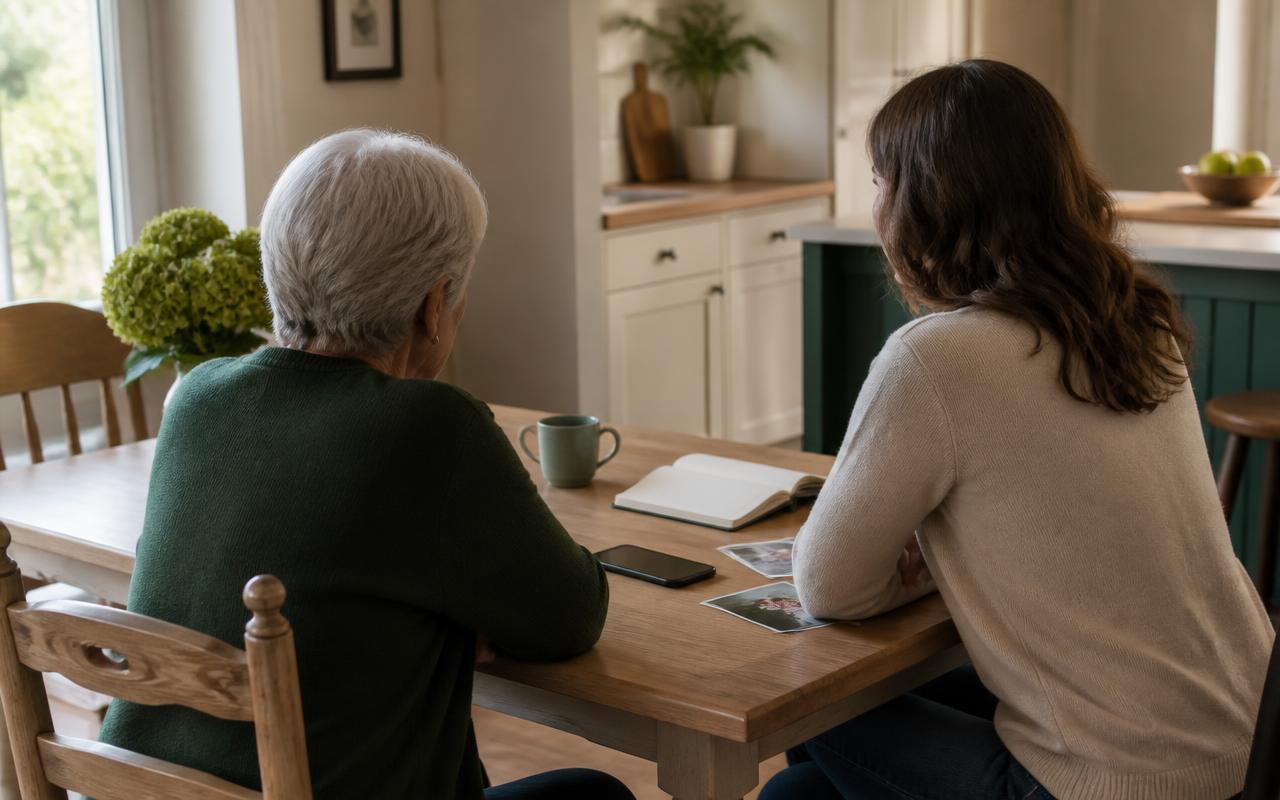
Families often remember the broad outline of someone’s life. They may know where a grandparent grew up, what kind of work a parent did, or which holidays everyone celebrated together.
The details are easier to lose.
Who sat where at Sunday dinner? What did the old house sound like at night? Which relative always arrived early? What did a parent think the first time they held their child? What ordinary part of family life do they still miss?
Recording a family memory gives those details somewhere to live outside one person’s mind. A focused voice memo or short video, along with one photograph and a written description, can preserve enough context for another family member to understand what happened and why it mattered.
Begin with one specific memory
A broad request such as “Tell me about your life” can be difficult to answer.
Choose one moment, place, person, or period of life instead.
You might begin with:
- A childhood home
- A first job
- A family vacation
- A wedding or courtship memory
- A holiday tradition
- A military experience
- A school memory
- A difficult move
- The birth of a child
- A neighborhood or hometown
- A relative who influenced the family
- An ordinary routine everyone used to share
A specific starting point helps the person picture where they were and who was around them.
Instead of asking, “What was your childhood like?” try:
- What do you remember about the kitchen in the house where you grew up?
- Who usually woke up first in your family?
- What did you do after school?
- Where did everyone sit during meals?
- Which neighbor did you know best?
- What happened on Saturday mornings?
Small questions often lead to fuller memories.
You do not need to ask every question in this guide while recording. Use the questions to help the person remember details, then decide what belongs in the final voice memo or video.
When several strong memories come up, preserve each one as its own Family Inventory entry.
Choose voice or video
Family Inventory allows each memory entry to include either a voice memo of up to five minutes or a video of up to two minutes.
A voice memo works well when:
- The memory needs a little more time to explain
- The person feels more comfortable without a camera
- The sound of their voice carries much of the meaning
- You want the recording to feel like a relaxed conversation
- You are recording together during a quiet visit
A video works well when:
- Facial expressions or gestures add to the memory
- The person is showing a place or object
- The central memory can be told clearly in two minutes
- A brief visual record adds something that audio alone would not capture
Ask which format the person prefers.
Someone who becomes self-conscious on video may speak much more naturally during a voice recording.
Keep the final recording focused on one memory so it fits comfortably within the available time.
Keep the setup simple
A complicated setup can make a familiar conversation feel like an interview.
For a voice memo:
- Choose a quiet room
- Place the phone nearby
- Turn off television or music
- Check that the microphone is not covered
- Decide which single memory you want to capture
- Keep the final recording within five minutes
- Keep the phone still once the conversation begins
For a video:
- Place the phone on a stable surface
- Keep the main light in front of the person
- Avoid a bright window directly behind them
- Check the sound and framing
- Decide on the central point before recording
- Keep the final video within two minutes
The recording does not require studio lighting or professional equipment. Clear sound and a comfortable speaker matter most.
Ask permission before recording
Tell the person when you plan to begin recording.
Explain:
- Whether you are making a voice memo or video
- Why you would like to preserve the memory
- Who will be able to access it
- Where it will be stored
- Whether they can ask you to stop
- Whether there are subjects they would rather avoid
Some relatives will welcome the idea immediately. Others may need time to become comfortable.
Permission also applies to stories involving other people. A speaker may be comfortable sharing a memory within the family but may not want it posted publicly or shared outside the household.
Record any privacy wishes with the entry so future relatives understand them.
Start with an easy question
The first question should help the person settle into the conversation.
Good opening questions include:
- Where were you living at the time?
- Who was usually there?
- About how old were you?
- What do you remember seeing first?
- What part of that day stands out most?
- Who do you think of when you remember it?
- How did the family usually talk about it?
- What happened just before the part you remember best?
Avoid beginning with the most emotional or complicated part of the memory. Let the speaker establish the setting first.
Ask about the setting
A memory becomes easier to picture when it has a place.
Ask:
- Where did this happen?
- What did the room or building look like?
- What town or neighborhood were you in?
- What season was it?
- What time of day was it?
- Who else was nearby?
- What could you hear?
- Was there a particular smell?
- What were people wearing?
- What objects or furniture do you remember?
- How did people usually get there?
Details about a porch, hallway, kitchen table, car, church basement, school gym, or backyard can make a memory recognizable to relatives who never saw the place themselves.
Ask about the people
Names and relationships are often clear to the speaker but unfamiliar to the person listening decades later.
Ask:
- Who was there?
- What were their full names?
- How were they related to the family?
- Did they have a nickname?
- What were they like at that age?
- What role did they usually play in the family?
- Who were you closest to then?
- Did anyone behave differently from usual?
- Who else might remember this?
- Is there someone whose part in the memory should be explained?
When the speaker says “my aunt,” “the twins,” or “our neighbor,” ask for enough information to identify the person later.
You can preserve the natural way the speaker refers to them while adding a full name in the written description.
Ask what happened
Once the setting and people are clear, let the person tell the memory in their own order.
Helpful prompts include:
- What happened next?
- What did you do?
- What did they say?
- How did everyone react?
- Did you know at the time that this was important?
- Was there a moment when things changed?
- What surprised you?
- What part do you remember most clearly?
- How did the day end?
- Did the family talk about it afterward?
Avoid interrupting to correct small details. Make a note and return to names, dates, or conflicting information after the person finishes.
Ask how it felt at the time
A family may know what happened without knowing how the person experienced it.
Ask:
- How did you feel when it happened?
- Were you nervous, excited, embarrassed, relieved, or proud?
- Did your feelings change later?
- Did anyone understand how you felt at the time?
- Were you expected to respond in a particular way?
- Is there something you wish people had known?
- Do you see the memory differently now?
A person may need time before answering. Let the pause remain instead of filling it with another question.
Ask why the memory stayed with them
Some memories last because they marked a major event. Others survive because of one ordinary detail.
Ask:
- Why do you think you still remember this?
- Did it change anything for you?
- Does it remind you of someone?
- Did the family learn something from it?
- Is this a memory you have told before?
- Did you understand its meaning differently as you got older?
- What part of it would you most want the family to remember?
- Is there anything people usually leave out when telling it?
The answer may explain why a seemingly small memory mattered.
Record ordinary family life
Family memories do not need to involve a major milestone.
Everyday questions can preserve how a family actually lived.
Ask about:
- Meals during a normal week
- Bedtime routines
- Household chores
- The route to school
- Music played in the house
- Favorite television or radio programs
- Family sayings
- Weekend errands
- Phone calls between relatives
- Games played together
- Pets
- Neighbors
- School lunches
- Work clothes
- Grocery shopping
- Car rides
- Summer evenings
- Snow days
- Sunday mornings
A memory of grocery shopping with a parent may someday reveal more about a relationship than a formal account of a large family event.
Record childhood memories
Childhood memories often contain details that disappear when a home changes or a neighborhood is rebuilt.
Questions might include:
- What was the first home you remember?
- Who shared your room?
- What did you keep beside your bed?
- Where did you play?
- What were you afraid of?
- What made you feel safe?
- Who helped you with schoolwork?
- What rules did your family have?
- What happened when you got in trouble?
- What did you look forward to each year?
- Which adult understood you best?
- What did you think you would become when you grew up?
Avoid assuming every childhood was happy. Let the speaker decide how much they want to discuss.
Record memories of work and service
Jobs and military service can shape a person’s identity for decades.
Ask:
- How did you get the job or assignment?
- What did you do during a normal day?
- What did you wear?
- Who trained you?
- What part was hardest?
- What skill did you become proud of?
- Who did you work with most closely?
- Was there a supervisor or leader you still remember?
- What did people misunderstand about the work?
- Did the experience change your plans?
- What did you carry with you afterward?
- Is there a memory you shared often when you came home?
Some experiences may involve fear, loss, danger, or trauma. Give the person control over what they discuss and when the recording ends.
Record relationship memories
Family members may know that two people married without knowing how they met or what their early life together was like.
Ask:
- How did you first meet?
- What did you notice about them?
- What was your first outing together?
- Who knew about the relationship first?
- What did your families think?
- When did you know the relationship was serious?
- What do you remember about planning the wedding?
- Where did you live afterward?
- What did you have to learn about one another?
- What made you laugh together?
- What helped you through difficult periods?
- What do you still appreciate about that person?
These memories can be valuable even when a relationship later changed or ended. Let the speaker describe it in the way that feels truthful to them.
Record family traditions
Traditions often change slowly, and the original reason for them may be forgotten.
Ask:
- When did the tradition begin?
- Who usually organized it?
- Where did everyone gather?
- What happened in the same order each time?
- What food, music, clothing, or decorations were involved?
- Was there a family rule connected to it?
- Did anyone always tell the same joke or memory?
- Who stopped participating over time?
- How has the tradition changed?
- Which part would you most like the family to continue?
Include traditions that were unique to one household, even when they were never formally named.
Let the speaker use their own words
Family expressions, regional pronunciations, repeated phrases, and speech patterns are part of the memory.
Avoid correcting grammar or asking the person to begin again because a sentence was imperfect.
A natural recording may include:
- Pauses
- Laughter
- Repeated details
- Forgotten names
- Changes of direction
- Side memories
- Family slang
- Background sounds from the home
Those qualities can make the recording feel familiar to the people who know the speaker.
You can clarify names or dates in the written entry without changing the recording itself.
Keep one entry focused on one memory
Family Inventory’s recording limits are designed for focused memories. A voice memo can be up to five minutes, and a video can be up to two minutes.
Choose one central memory and give the entry a specific title.
Examples include:
- Grandma Ruth’s First Day of Teaching
- Dad’s Memory of the 1978 Ice Storm
- How Mom and Aunt Linda Shared a Bedroom
- Grandpa’s First Car
- Sunday Dinner at the Farmhouse
- Moving to Arizona in 1964
- The Summer the Family Built the Porch
- Christmas Morning at Nana’s House
A specific title makes the memory easier to find later.
A longer conversation may produce several entries. You might preserve one memory about a childhood home, another about a first job, and another about a family tradition.
Do not give several unrelated memories one broad title such as “Family Memories.”
Choose one meaningful photograph
Family Inventory allows one photograph for each memory entry.
Choose an image that helps identify the person, place, or event.
You might use:
- A photograph of the person telling the memory
- A family photograph from that period
- The home or location connected to the memory
- An object mentioned in the recording
- A photograph taken during the event
- A document connected to the experience
When no historical image exists, a current photograph of the speaker can still give the recording a recognizable face.
Use the written entry to identify the people, location, and approximate date shown in the photograph.
Write down the basic context
A future listener may not know what the family knew when the recording was made.
Include:
- The speaker’s full name
- Their relationship to the family
- The title of the memory
- The people mentioned
- The location
- An approximate date or time period
- The date the recording was made
- Who conducted the conversation
- Any names or details that remain uncertain
- Privacy instructions when needed
A brief written introduction can give the recording enough structure without repeating everything the person says.
For example:
In this voice memo, Margaret Ellis remembers spending summers with her grandparents on their farm outside Springfield during the late 1950s. The recording was made by her daughter, Anne, in 2026.
Be honest about uncertain details
Memories can remain meaningful even when a date, location, or sequence is unclear.
Use phrases such as:
- “Around 1965”
- “Possibly during her junior year”
- “According to Robert’s memory”
- “The exact house has not been confirmed”
- “Other relatives remember the event differently”
- “The family believes this happened before the move”
Do not turn an estimate into a confirmed fact.
Another relative may later provide a document, photograph, or different recollection that adds context.
Record more than one version when memories differ
Two people may remember the same event differently.
One sibling may remember a move as exciting. Another may remember being frightened. One relative may place an event before a wedding, while another places it afterward.
Each version can be preserved with the speaker’s name attached.
You might write:
- “This recording reflects Daniel’s memory of the event.”
- “His sister remembers the date differently.”
- “Both accounts have been preserved.”
Different memories can reveal how each person experienced the same family event.
Know when to stop
A conversation does not need to cover every possible question.
Stop when:
- The speaker becomes tired
- The memory becomes too painful
- The person asks to pause
- The conversation loses focus
- The recording has captured the central memory
- Another topic would work better as a separate entry
- The voice memo approaches five minutes
- The video approaches two minutes
A short recording with a clear memory is easier to revisit than one that tries to cover several unrelated subjects.
You can always create another entry for the next memory.
A simple first memory recording
Before recording, ask these five questions:
- Where were you when this happened?
- Who was there with you?
- What do you remember most clearly?
- Why has this memory stayed with you?
- What would you want someone in the family to understand about it?
Then capture the clearest parts in either:
- A voice memo of up to five minutes
- A video of up to two minutes
Choose a specific title, add one photograph, and write down the names and approximate date.
That gives the memory enough context to remain useful even when the recording is brief.
Common mistakes to avoid
Starting with a question that is too broad
A specific person, place, or event gives the speaker somewhere to begin.
Reading from a long list of questions
Listen to the answer and ask about the details that naturally come up. The conversation should not feel like a questionnaire.
Interrupting to correct names or dates
Let the person finish. Return to uncertain details afterward.
Trying to fit an entire life story into one recording
Choose one memory for each entry. A focused five-minute voice memo or two-minute video will be easier for relatives to understand and revisit.
Recording several unrelated memories as one entry
A focused entry is easier for relatives to understand and find.
Forgetting to identify the people mentioned
Record full names and relationships in the written description.
Choosing a photograph without adding context
Identify who or what is shown, even when the image seems obvious today.
Treating ordinary memories as unimportant
Daily routines often preserve the strongest sense of how a family lived together.
Waiting for a formal interview
A relaxed conversation at the kitchen table can preserve a memory just as well.
Record the memory that comes up naturally
You do not need to begin with the oldest event or the most important person in the family.
Start with the memory someone is already telling.
Ask enough questions to understand the setting, people, and meaning, then record one focused version. Use a voice memo of up to five minutes or a video of up to two minutes.
Add one photograph and enough written context for another relative to follow the memory.
A familiar voice describing an ordinary moment can become one of the most valuable things a family saves.
More resources
Getting started
How to Create a Family Heirloom Inventory
A practical, step-by-step guide to documenting the keepsakes and belongings that matter to your family.
Family stories
Questions to Ask Your Parents About Family Keepsakes
Meaningful questions that can help uncover the people, memories, and stories behind treasured belongings.
Recipes and traditions
How to Preserve the Stories Behind Family Recipes
Capture the memories, traditions, and personal details that make a family recipe worth passing down.